
Thursday, June 22, 2006


Wednesday, June 21, 2006
Sin City (2005)
 With apologies to a good friend of mine: criticizing Sin City for it’s multiple storylines (of which only locations and several characters are shared) and stylistic indulgence over plot is to completely miss the point (or, at the very least, avoids it by shooting down the model before addressing the composition). Sin City does not exist in the real world, and nor does it entirely exist within the realms of traditional cinema. To experience the film is to crawl inside the imagination of its creator, Frank Miller, who has created a surreal vision of reality that comments on our world by exaggerating the corruptions of society to the point where criminals, hookers, and cop-killers are the good guys, if only because they own up to their flaws. Adapted directly from its pulpy comic roots to the screen by Robert Rodriquez with absolute authenticity, the film suggests film noirs’ wet dream of itself on steroids: the inky blacks run deep amongst the murky grays, ties flap in the wind of open convertibles and characters speak with the self-aware grizzle of someone whose seen it all many times over. Some films exist entirely for style, and Sin City would do quite well enough on that turf alone, but to say that the glorious black-and-white (and occasionally red-all-over) visuals are wholly devoid of substance is a sad disowning of the mythic stories of vigilante justice and criminal honor that make up the films narrative core. Three of the seven “Sin City” stories are brought together here in somewhat overlapping fashion: “The Hard Good-Bye,” “That Yellow Bastard” and “The Big Fat Kill.” That Frank Miller wrote his stories in somewhat cinematic fashion helps tremendously in maximizing the reverent approach taken here, although the page-to-screen approach occasionally limits the possibilities of the newfound medium. What really sells the believability of such a unique vision, however, is the pitch-perfect casting, with the likes of Bruce Willis, Clive Owen, and Benicio Del Toro channeling their acting chops into their characters with equal part genre convention and human vulnerability. None of the excellent cast is better than Mickey Rourke, who inhibits the murderous Marv with righteous indignation and a burrowed maniacal glee. When he finally confronts the corrupt authority he’s been relentlessly pursuing, he responds to the inquiry as to whether or not killing a defenseless individual will satisfy him with one of the film’s many immortal lines. “The killing? No. No satisfaction. But everything up until the that, will be a gas.”

Office Space (1999)
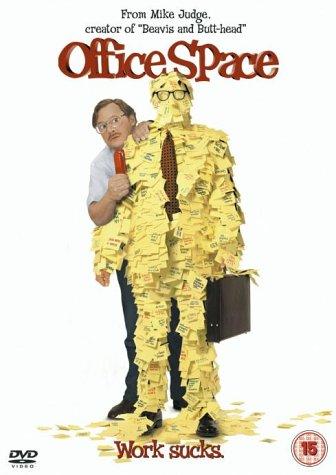 Along with Kevin Smith’s debut film Clerks, Office Space represents the cinematic bible of the 90’s slacker generation, a true-to-life ode to the virtues of doing absolutely nothing (and even better, being paid for it). His inner spirit almost completely eroded away by the deadening routines and repeated (not to mention unnecessary) chastisement at his programming job, Peter Gibbons (Ron Livingstone) seeks help with an “occupational hypnotherapist” whose methods prove more successful than anticipated after an unpredictable coincidence during his first session. Freed from his financial anxieties and employment-inspired woes, Peter absolves himself of all responsibility and simply enjoys life. Ironically, his newfound attitude actually gets him promoted at work while his hard-working friends are unceremoniously ejected from their occupations, prompting a plan by the trio to hack the company’s computers and steal their profits from right out under their noses. The plotline to Office Space is secondary to its attention to the details of everyday life, from the difficulties of technology to the soulless demeanor of ones supervisor, its subtlety and intelligence finding humor where lesser films would have to place poorly crafted stupidity in its place. All this is typical of the work of Mike Judge, whose works (including “Beavis and Butt-Head” and “King of the Hill”) have been consistently smart and cunning satires on the standards of society with an affinity for memorable characters and inward reflection. The glue that holds Office Space together, however, is the tertiary character Milton (Stephen Root), a squirrelly employee whose introverted nature is repeatedly abused by the upper management until he reaches the breaking point. He speaks for every working person when he demands his red stapler back.
Napoleon Dynamite (2004)
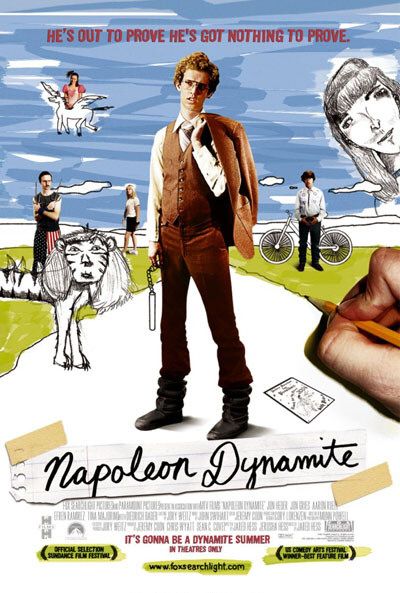 Quickly adopted by college-aged hipsters and declared fans of “quirky” films, Napoleon Dynamite is quite possibly the worst thing to happen to cinema since the birth of Michael Bay. Some have been quick to liken Jared Hess’ droll, deadpan style of humor to Wes Anderson’s deliberately tranquil style of filmmaking. These comparisons seem to only notice the surface-deep similarities of static screen compositions and the focus on character interaction over dynamice plot details; far more critical are the differences, most notably the fact that Wes Anderson actually cares about his characters and their existential plights, whereas Napoleon Dynamite exists only to parade them around for ninety minutes worth of soulless ridicule. The cast of characters: Napoleon Dynamite (Jon Heder), a socially handicapped loser of the lowest order, Pedro Sanchez (Efren Ramirez), a walking Mexican stereotype seemingly on a steady stream of Thorozine, and Uncle Rico (Jon Gries), an ex-college football athlete who hopes to time travel back to 1982, where things should have turned out differently. The film’s structure (something like intentional piecemeal) only reinforces its contempt for its characters, not that they particularly deserve any sympathy in the first place. The film is content to allow these sad souls to wander from one set piece to another, engaging in pointless behavior that aims to inspire laughs the movie pretends it doesn’t recognize; all the viewer can do is sit back and watch to see what gags work and which ones don’t (for me, only the poorly-timed execution of a sick cow counts as genuine humor). Laughter multiplies, and, like the convicted murderers who look back with horror at their lynching of an innocent man in Fritz Lang’s Fury, I too was mortified upon second viewing at the fact that I fell for the film’s hateful indulgence the first time around. That the screening of the movie I attended was one of my few social encounters with the fraternity members amongst my dorm is a telling piece of evidence; Napoleon Dynamite is equivalent to the relentless mockery of social outcasts by the popular folk on a school playground: nasty, undeserved, and completely fucking pointless.
Crimson Gold (2003)
 While very much an Iranian take on many of the same themes in Martin Scorsese’s Taxi Driver, such an appropriate description should in no way suggest that Crimson Gold isn’t a challenging and engrossing study of one character amidst the destructiveness of society on its own. Hussein (Hossain Emadeddin) is a medication-addled pizza deliveryman, a close friend and soon-to-be brother-in-law with Ali (Kamyar Sheisi). The film immediately puts its audience into a chokehold; the opening scene (filmed in a single, stationary take) is a botched robbery attempt that ends with Hussein shooting himself in the head before the authorities arrive. Flashback to several days prior where life is seemingly going about business as usual, but beneath the deadening, oppressive routine of it all, Hussein is a basic human being whose patience is being slowly worn down to reveal a violently ticking time bomb. Every image of Crimson Gold, from Hussein and Ali endlessly cruising the city traffic on their moped to a young boy standing arm with an assault weapon he is obviously not learned enough to use properly, suggests the crushing weight of the upper classes bearing down on the oppressed poor. His senses dulled by the drugs needed to keep him "healthy," Hussein wanders about his have-not lifestyle while the haves impose holier-than-thou attitudes and the authorities senselessly exercise their power. The film suggests parallels with politics between the U.S. and Middle East, but is most effective in examining the oppressive behavior of society towards the lower classes who contribute just as much as everyone else. Eventually the meager scraps meant to satiate the poor fail to keep them tranquil, much like Hussein's sedative medication. As stated by a homeless man to an overbearing police officer: "Show some mercy, please."
Wednesday, June 14, 2006
The Terrorist (2000)
 The Terrorist focuses on the philosophical dilemma of suicide in the name of a greater cause, or at least, what one believes to be the case. The tale of a young, patriotic girl named Malli (a fine performance from Ayesha Dharker) who wishes to follow in the footsteps of her brother (who died as a martyr year ago) is stripped of all political, religious, and social contexts, instead choosing to charge the story exclusively with the gravity of self-induced destruction in the name of a greater cause. Malli is selected from a group of wiling females to infiltrate the welcoming ceremonies of an unnamed V.I.P., ready with a bomb pack and detonator when the individual is close and unprotected. The film succeeds in illuminating the motivation for an act that is all too common in this modern world’s political turmoil, as individuals in baseless societies, many easily swayed by religious promises of glory and honor, quickly find that what they achieve in death can be far more beneficial to their cause than what the accomplish in life. Its choice to present its story without specifics allows for more freedom of ideological exploration without being hampered by contextual details, but is also paradoxically limiting in its ultimate commentary on real-world violence (the use of a plot twist to help justify Malli's ultimate decision on whether to go through with the suicide attack or not is an argumentative disappointment as well). Nonetheless, The Terrorist operates above the misguided belief that violence can end violence, and argues in favor of peaceful resolution over acts that can only lead to endless bouts of retribution. With lush cinematography and a stunning use of contrasting focus between the foreground and background (which often simulates the heavy psychological burden Malli bears, as she shifts from determined to indecisive in her call to martyrdom), the film emphasizes the many values that can be found even in a life hampered by oppression. The final, quite perfect shot is a triumph of the human spirit over the seduction of its destructive tendencies, and a call for peace amidst senseless chaos.
Neil Young: Heart of Gold (2006)
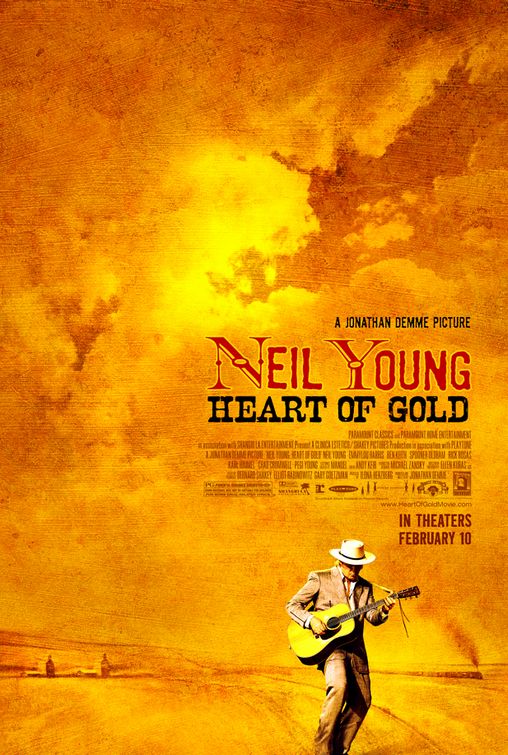 A gold-tinged amber waves of grain palate illuminates the stage of Nashville’s Ryman Auditorium during Neil Young’s two evenings of performance there for his 2005 Prairie Wind tour, the ember glow of which lends Jonathan Demme’s intimate concert film Heart of Gold a distinct sense of spiritual comfort and communal unity. A brief intro of interview footage from Neil Young and his fellow friends and musicians contextualizes the unhampered concert that is to follow, which consists of roughly one half cuts from his current album (which was recorded in the midst of a brain aneurysm) and one half classic tracks. Unlike numerous other concert films that misguidedly shatter the essence of the concert environment via unnecessary technical panache, Jonathan Demme simply allows his camera to take in all that the stage has to offer, waxing the performer-audience relationship with a sublimely effective mixture of close-ups and long shots that emphasize both the deeply personal nature of the songs performed as well as the collaborative, familial ties on stage (and quite wisely, the film completely avoids the pointless audience shots so typical of this genre). Fans of Young’s music will be more immediately lent to his performance, but even as only a passive listener of his catalogue over the years, I was very quickly won over by the simple, soul-baring immediacy of his craft. Experiencing Young’s set list is like attending an autobiographical dream theater, drawing from decades of wisdom and a lifetime of experience whilst touching on mortality, memories, relationships and things to come. The elegant camerawork invites the viewer into this fine fabric at a subconscious level, with Young often framed on either side of the screen rather than in the center while the supporting musicians and background singers are equally involved in the compositions, while the tight facial work on more personal songs unites the visual and audio experiences at even deeper level. Be sure to stay through the end credits; Young’s solo performance to an empty theater lingers like vast expanse of memories from a life well spent. Heart of Gold’s absolute purity seems proof that this collaboration between Young and Demme was indeed a match made in heaven.
Tuesday, June 13, 2006
Superman (1978)
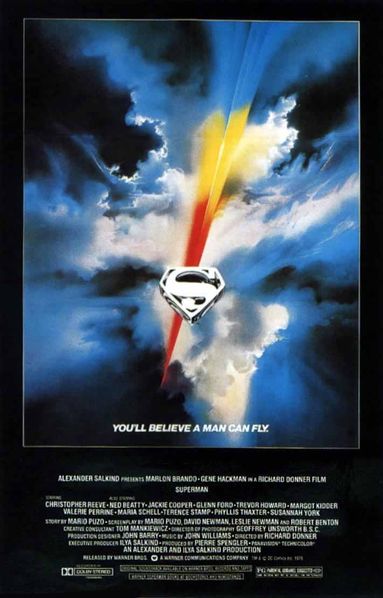 Penned by Godfather scribe Mario Puzo and shot with the same epic breadth as any film by David Lean during the previous twenty years, Superman aims high for an aura of grandeur that it never manages to reach, a fact that renders this two-and-a-half hour superhero epic as something of a collective conflict of interests. Unlike the character of Superman, who manages to juggle his two identities (the other being mild-mannered journalist Clark Kent) with relative ease, Richard Donners' film never finds the right mixture for both its reverent seriousness towards the Superman mythology and the silly undercurrents inherent in such a story, the result being an awkward mishmash that will seemingly only appeal to those already won over by the titular character. Granted, Superman himself is the most appealing aspect of the film, warmly portrayed by the young Christopher Reeve and given remarkably human characteristics, despite his abilities being anything but human. Gene Hackman would be an inspired choice as supervillian Lex Luthor - with a better script. Here, bogged down by bad dialogue and a comic-relief sidekick so irritating as to make Jar-Jar Binks look tolerable by comparison, we never get to see his full chops on display (whereas Marlon Brando, in perhaps the most expensive cameo in movie history, never cared less about a role than he does here). The somewhat hammy, dated special effects give the film a nostalgic touch, and the action set pieces are generally engaging, but neither of these aspects is able to offset the simultaneously overreaching and uninspired direction. Sadly, Richard Donners' vision isn't nearly up to par with the standards of the Man of Steel.
Monday, June 12, 2006
The Usual Suspects (1995)
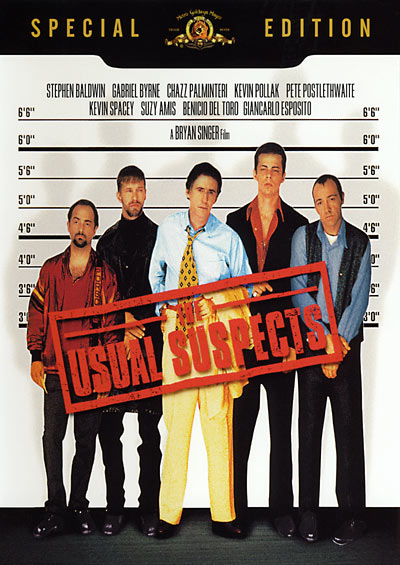 Cowardly manipulation and nonexistent mystery embellished out of thin air make up the bulk of The Usual Suspect's justification for existence, and – despite critical praise and absurdly high placement on imdb's Top 250 films list – they don't make a very strong case once all the pieces have settled. A botched crime and subsequent explosion aboard a ship docked in California that leaves many dead lands lone witness Verbal (Kevin Spacey) in a demanding investigators office, easily allowing for roughly thirty minutes worth of plot to be stretched out to feature length as the audience is jerked back and forth between tepid interrogation and UPN-quality flashbacks to earlier heists Verbal took part in with four other prominent henchmen. Dumbasses will be amazed by the film's ultimate twist, but it doesn't take much sniffing around to realize from the outset that some obvious puzzle pieces are being intentionally hidden from sight, if only to conjure a sense of mystery when there really is none in sight. The film condescends its audience by pretending to have far more cards up its sleeve than it actually has, and even if it's crass manipulation actually bore a worthwhile payoff, The Usual Suspects commits further offenses by failing to employ any form of consistency in its perspective-filtered presentation of critical events. In other words, the film might appear crafty in piecemeal (what with such deliberately enunciated, obviously profound dialogue - "the greatest trick the devil ever pulled was convincing the world he did not exist" - you don't say!), but get up close and the transparency of it all is terribly obvious. Nothing matters save for the orchestration of the final jerk-around, and The Usual Suspects' attempts at such a payoff come across as an atrociously orchestrated bluff.
Sunday, June 11, 2006
I Am a Fugitive From a Chain Gang (1932)
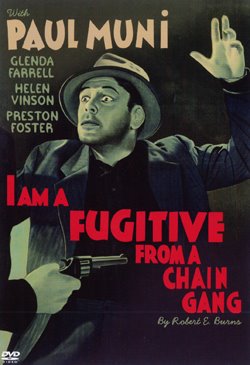 I Am a Fugitive From a Chain Gang achieves greater illuminating into the inhumanities of the corrupt penal system by sidestepping the easy moralizing to be had from the issue and delivering its many blows via pure dramatic grizzle. James Allen (Paul Muni) is a traveling veteran out of work during the depression. Lured by the offer of a free hamburger, he is tricked and forced at gunpoint into aiding a would-be criminal; when the cops show up at the scene, he bears the blame for the crime, and receives the incredibly harsh sentence of ten years hard labor on a chain gang. While the location is never stated outright but heavily implied (and outright confirmed when the film was banned there for many years after its release), the chain gang system so commonly employed in Georgia is the main villain of the film, although greed and vengeance from other small players ultimately play into the many obstacles James encounters. After over a year of excruciating time served, he manages to escape with his life, ultimately taking refuge in Chicago where, under a new name, he rises to become a prominent architect heralded by the city. When the Georgia authorities finally track him down, he agrees to return to serve a much-shortened sentence so as to clear his name and move on with his life, only to learn that his promised pardon is to be delayed indefinitely so as to exact vengeance for the embarrassment he brought upon the state. While the story itself is quite harrowing, guided in large part by the soul-searing performance by Paul Muni, the lingering focus on the inhuman treatment of the gang members – from the endless lines of chains to the beating of members who suffer fatigue on the job – is perhaps the film’s most directly affecting aspect. That the film, based on the true story of Robert E. Burns, aided in raising public awareness of the chain gang practices so much as to outlaw them is something of a reprieve to its utterly bleak conclusion, where the destructiveness of the state ultimately makes a criminal out of the honest man they so ruthlessly castigated. James, continuously on the run or in hiding, finds his once-to-be fiancé so as to impart a final farewell. At the sound of approaching sirens, he shrinks back into the shadows, and when asked how he will survive, states with equal parts delirium and spiritual defeat: “I steal!”
Balseros (2002)
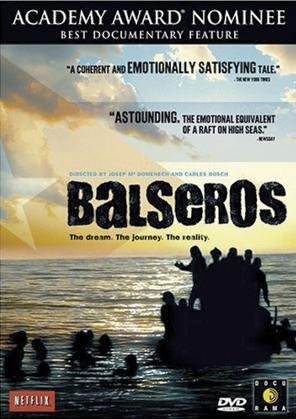 By avoiding the conniving tactics and overly slanted attitudes that have plagued so many politically minded documentaries of the past few years, and in doing so allowing its human elements to speak for themselves (and all the more clearly because of it), Balseros proves to be an illuminating breath of fresh air. The title refers to the Cuban immigrants who attempted to enter the United States during the 1990’s via rafting from their homeland to Florida, a dangerous task that left many dead when the unpredictable ocean waters destroyed their tiny vessels. With U.S. discourse on the subject lacking any form of empathy or real knowledge as to the state of living in Cuba, these refugees are regularly seen as miscreants who exist only to rupture the United States economy; Balseros watches with unflinching realism the decrepit Cuban society that provides happiness but little in the way of opportunity (very much exacerbated by the U.S. embargo, which succeeds more in lowering the standards of living than in placing any real political pressure on premier Fidel Castro). Ultimately, the only thing that separates the U.S. citizens from the Cuban balseros is the formers luck of being born in the States in the first place. Balseros follows the stories of several individuals rooted in the “balseros crisis” (as it came to be known), some of whom are separated from their family, some who never get the opportunities they strive for so diligently. The filmmakers make no judgments or impose no opinions on the directions these people take over the years, some finding happiness upon reaching America and others remaining in just as much an economic rut in the new capitalist economy as in their homeland Cuba. Whilst certainly reflective of major social and political strains present in this divide, Balseros is most effective in portraying the perseverance of the human spirit under the crushing circumstances of an unaccommodating society.
Categories
Where I'm Published
Features

Latest posts
Screening Log
Links
- 19th Street Civic Theatre
- Cinemarati
- David Edelstein
- Elusive Lucidity
- Film Experience
- The Fountain
- girish
- GreenCine Daily
- The House Next Door
- The IFC Blog
- Internet Movie Database
- it's only a movie
- Jim Emerson's Scanners
- Like Anna Karina's Sweater
- Long Pauses
- Nick Schager Film Project
- No More Marriages!
- Once Upon A Time In The West... of Wales
- Patrick St. John
- ReelViews
- Reverse Shot
- Roger Ebert
- Rotten Tomatoes
- Sergio Leone and the Infield Fly Rule
- Slant Magazine
- A Sleep Over
- The Stranger Song
- Take Back Your Tea Time
- This Modern World
- when canses where classeled...
- World of Pop
Search
Contact
- Questions? Comments?
- Absolutely hate my guts?
- Let me know!
- E-mail: strjh02@moravian.edu